3 min read·
How a South Gate Couple Remodeled Their Home for Safety and Accessibility
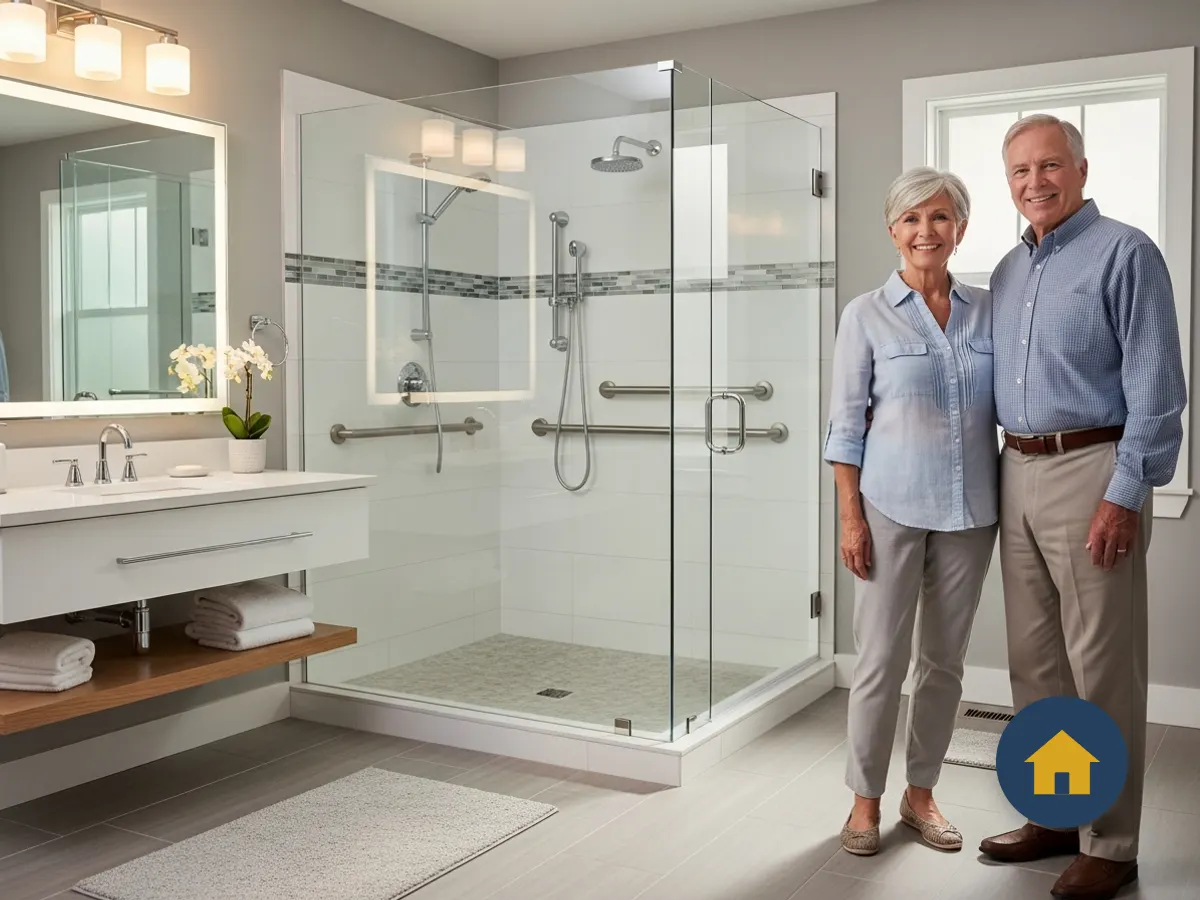
A retired South Gate couple had raised their family in the same single-story home for decades, but the step-down shower and narrow hallways were starting to feel like obstacles rather than features. They wanted to renovate the aging home to make it safer and more accessible for the years ahead. With both of them in their seventies, they saw the upgrades as an investment in staying put rather than moving.
Names and details have been changed for privacy. These are illustrative examples of common scenarios. Individual results vary; not a guarantee of any loan outcome.
The Challenge
Accessibility upgrades like a curbless shower and widened doorways can add up quickly when done all at once, and paying out of pocket would have drained the savings they kept for emergencies. Financing the work with a home-equity loan or credit cards would have meant a new monthly payment on a fixed income. The couple preferred a way to fund the project without adding a recurring bill to their budget.
The Strategy
With their HECM's required HUD counseling complete, they used reverse mortgage proceeds to complete the upgrades, drawing on home equity rather than taking on new monthly financing.
The Outcome
They finished improvements including bathroom modifications, wider doorways, and better lighting, making the home safer to age in place.
What This Made Possible
- Bathroom modifications completed
- Wider doorways for accessibility
- Improved lighting throughout
- No new monthly loan payment
Frequently Asked Questions
What home modifications help seniors age in place?
Common upgrades include walk-in or curbless showers, grab bars, wider doorways for walkers or wheelchairs, ramps, lever door handles, and brighter lighting. Reverse mortgage proceeds can fund these projects.
Do I keep ownership of my home after remodeling with a reverse mortgage?
Yes. You remain on title and own your home. A reverse mortgage is a lien like any mortgage; it does not transfer ownership to the lender.
Do I need lender approval for how I spend reverse mortgage proceeds on my home?
For most standard payouts the funds are yours to use as you see fit, including remodeling, so you generally do not need to itemize projects for approval. If a portion is set aside specifically for required repairs as a condition of the loan, that amount must go toward those repairs; your loan officer can explain any set-aside on your file.
Reverse Mortgages in South Gate
South Gate is a Southeast Los Angeles community in Los Angeles County, with established neighborhoods like Hollydale. Many longtime homeowners here have built significant equity as values have risen over the years — equity a reverse mortgage can help convert into retirement cash flow without selling the home or taking on a monthly mortgage payment.
Reverse Mortgages in South GateMiguel A. Vazquez (NMLS #401212) is a California DFPI Licensed Mortgage Broker operating as Reverse Mortgage Plus / Home Central Financial. This website provides educational information only and does not constitute financial, tax, or legal advice. Loan estimates and illustrations are for informational purposes only. Actual terms depend on borrower qualifications, property value, and market conditions. Not a commitment to lend.
